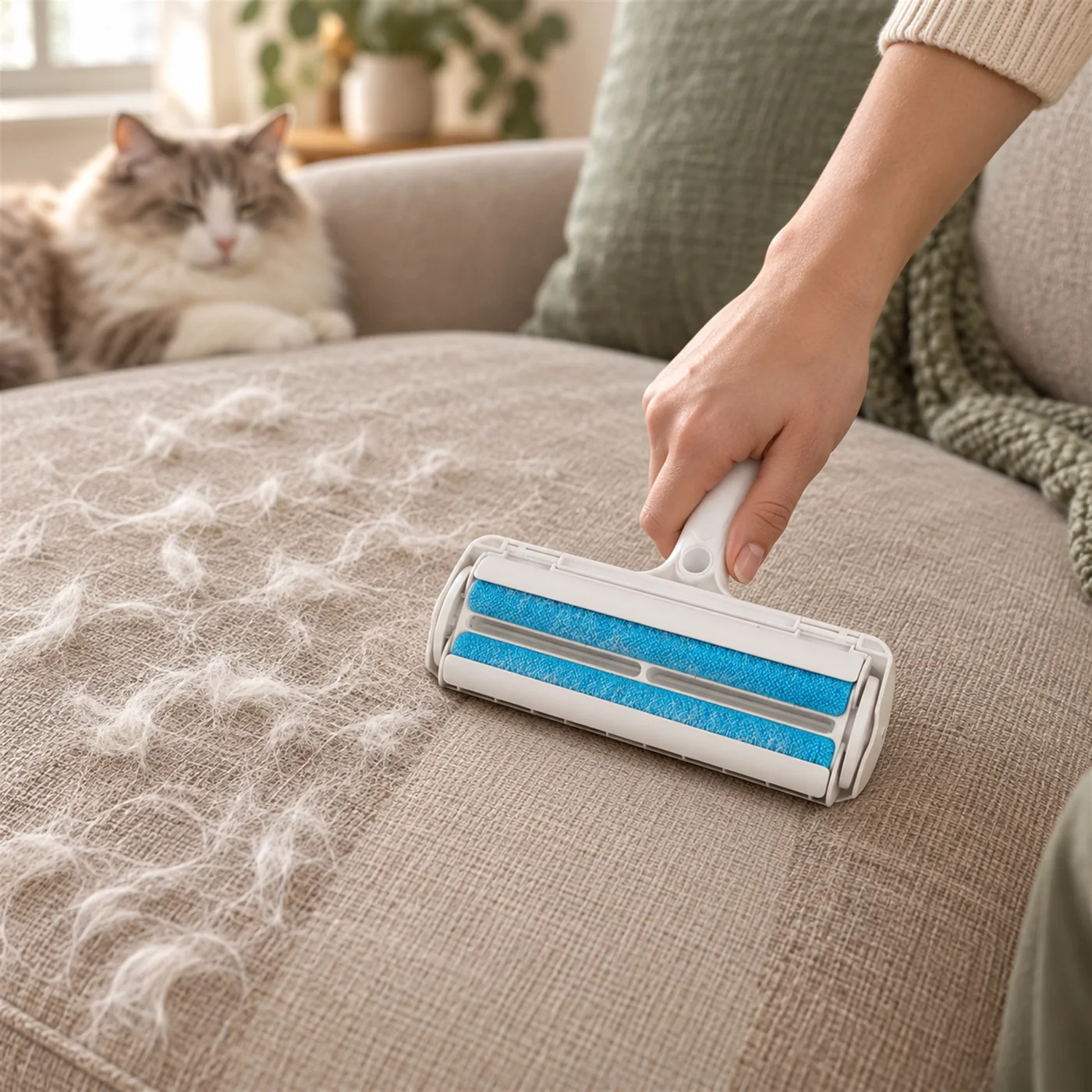
If you share a small apartment with a cat, the fur ends up everywhere: on the couch, your black jeans and the pillow you just changed. This guide shows how to get cat hair off couch cushions, clothes and bedding with tools that actually work, a laundry trick recommended by Consumer Reports, and a simple routine that stops the fur from building up again. It also explains when heavy shedding is a sign to call your vet.
Why there’s so much cat hair
Shedding is normal. Cats lose old hair all year as new hair grows in, and many shed more in spring, when they drop their thick winter coat as the days get longer, according to Hill’s Pet Nutrition. Long-haired cats, seniors who groom less thoroughly and stressed cats can all leave more fur behind.
In a small apartment you simply notice it more. The same few spots get all the action: the couch, the bed and whatever chair is next to the window.
The good news: you can deal with it from two sides. Remove loose fur from your cat before it falls out, then make cleanup quick enough that you actually do it.
Step 1: Brush your cat (it’s the best way to cut the fur)
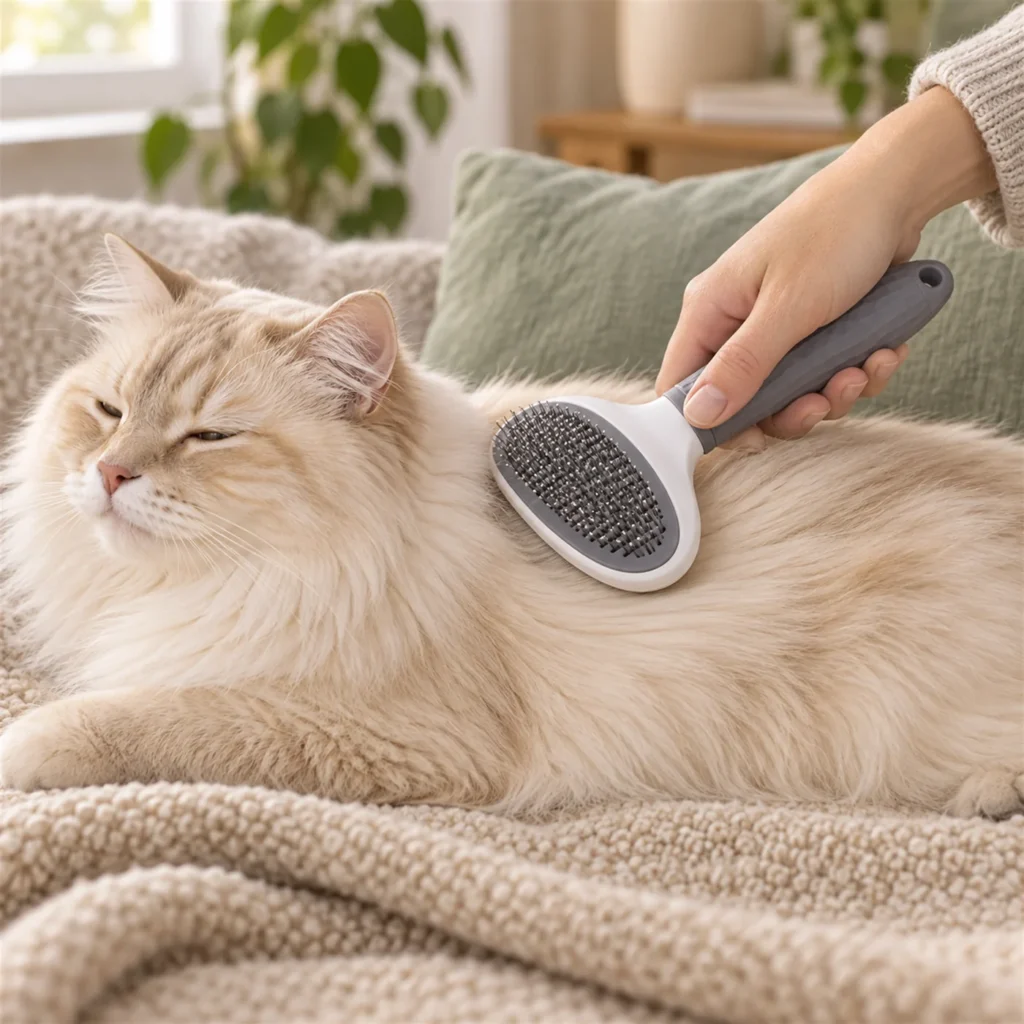
Every hair you brush out is a hair that doesn’t end up on the couch. Hill’s calls regular brushing “the best way to deal with your cat shedding a lot.”
How often depends on the coat. VCA Animal Hospitals recommends daily brushing for cats with long coats to prevent tangles and mats, while short-haired cats may need it less often. VCA adds that brushing reduces the amount of hair your cat swallows while self-grooming, which helps cut down on hairballs.
A few tips that make brushing easier:
- Keep sessions short. A few minutes after a meal, when your cat is relaxed, works better than a long session once a month.
- Brush with the direction of the fur, gently, and stop before your cat gets annoyed. End with a treat.
- Use the right brush. A slicker brush with fine pins lifts loose fur and undercoat. Our self-cleaning slicker brush for cats has a button that pushes the collected fur off the pins in one piece, so it goes straight in the trash instead of floating around the room.
- Don’t cut out mats with scissors. VCA warns to use clippers only, and to see a groomer or vet for severe matting.
During spring shedding, or if you live with a long-haired cat, step up to daily brushing for a few weeks.
How to get cat hair off couch cushions
Start with the right tool for your fabric. Most couches respond to one of these:
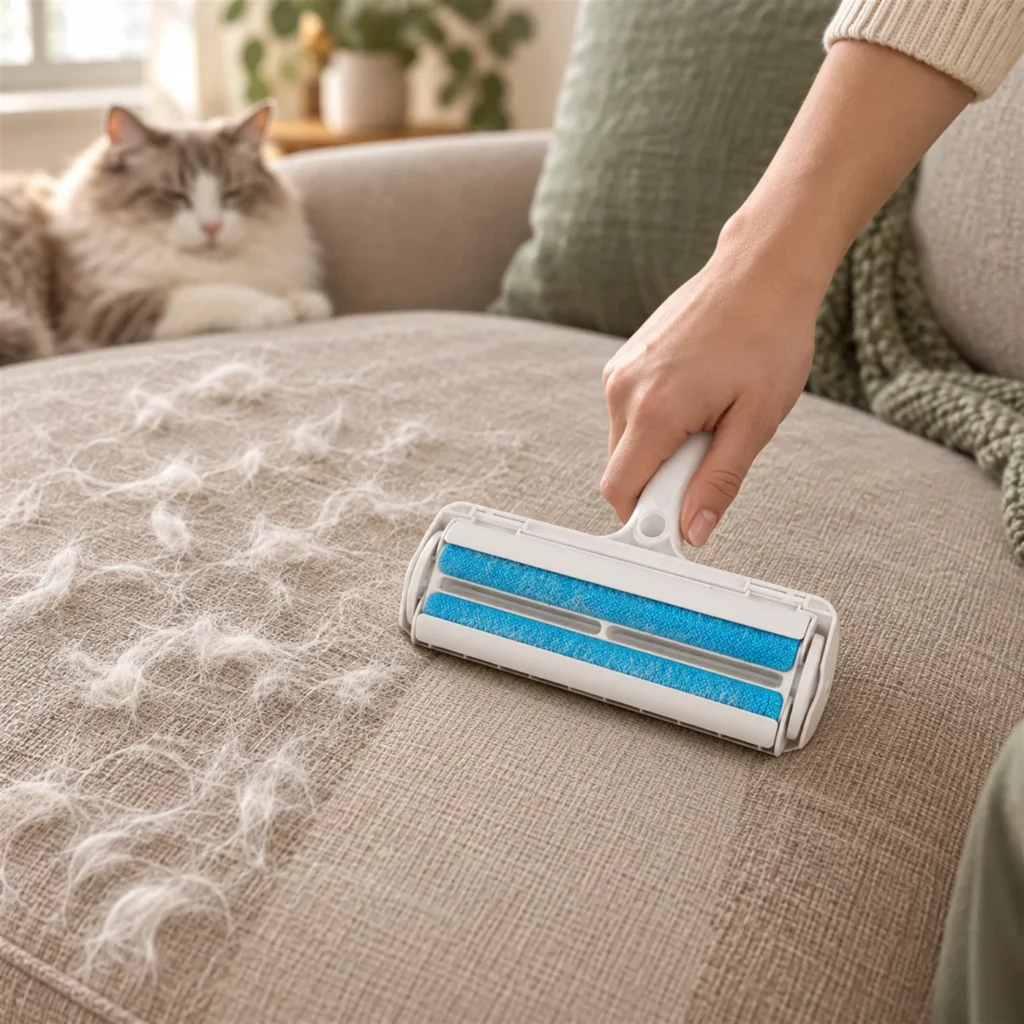
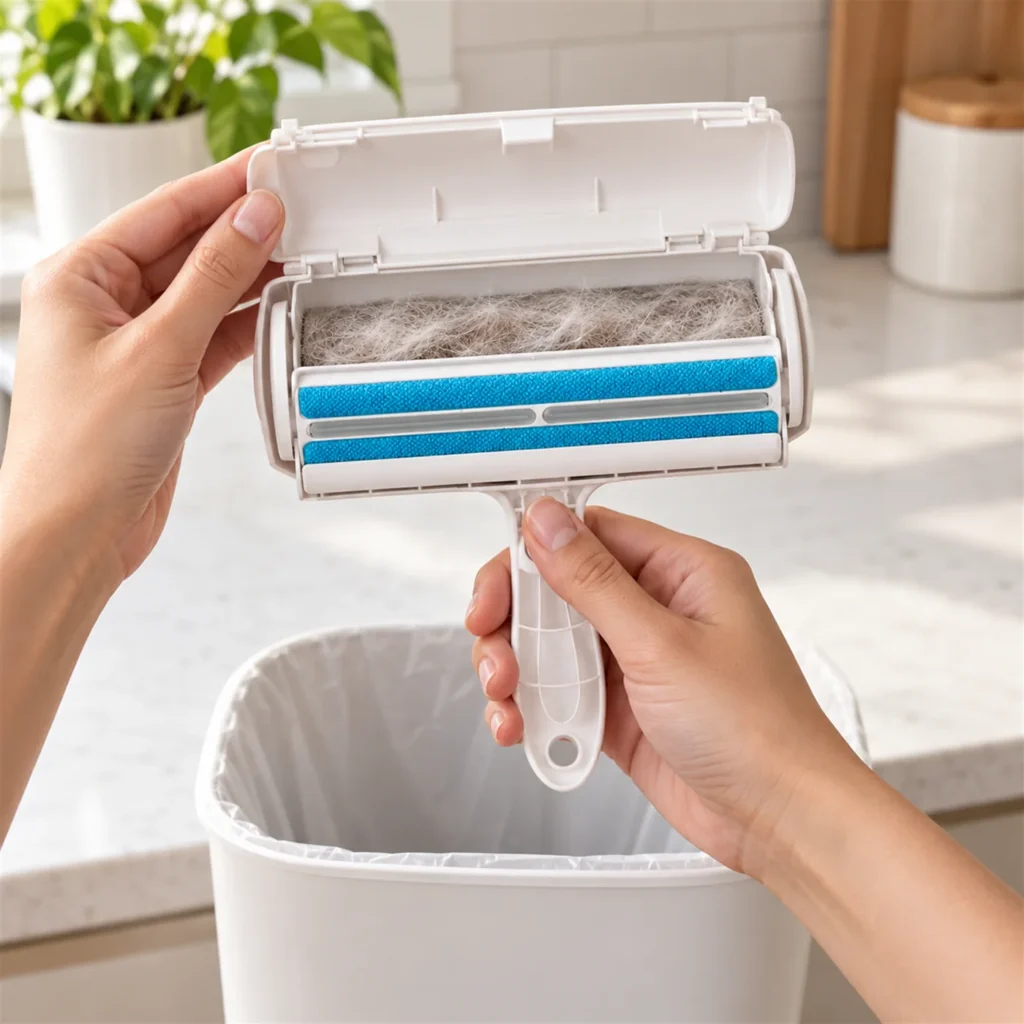
- A reusable pet hair roller. Short back-and-forth strokes catch fur from the fabric and trap it inside the roller. Our reusable pet hair remover roller works best on upholstery and textured fabrics, needs no sticky sheets or batteries and empties with one press. It’s the fastest daily fix for the cat’s favorite cushion.
- A damp rubber glove. Put on a household rubber glove, dampen it slightly and sweep your hand across the cushion. The fur rolls into clumps you can pick up. It’s cheap and works well on corners and seams.
- Your vacuum’s upholstery tool. Once a week, vacuum the whole couch, including under the cushions, with the small upholstery or pet tool. Go slowly so the brush can lift embedded hair.
- A lint roller for small areas or a quick touch-up before guests arrive.
How your couch fabric behaves:
| Couch fabric | How cat hair behaves | What works best |
|---|---|---|
| Velvet, chenille, textured weaves | Fur weaves in and clings | Reusable roller, damp rubber glove, then vacuum |
| Microfiber and tight-weave fabrics | Fur sits on the surface | Roller or vacuum; a damp glove for quick passes |
| Leather and faux leather | Fur doesn’t grab, but collects in seams | Wipe with a slightly damp cloth, vacuum the seams |
| Linen and cotton slipcovers | Fur clings, especially with static | Roller, or remove and use the laundry trick below |
Then make next week easier: put a washable throw on your cat’s favorite spot. Shake it out every few days and wash it, instead of cleaning the whole couch.
How to get cat hair off clothes
For a quick fix while you’re dressed, a lint roller or a strip of wide tape is still the easiest option.
For laundry, Consumer Reports recommends a simple routine that also keeps pet hair from building up in your washer:
- Remove what you can by hand with a lint roller or tape.
- Run a 10-minute, no-heat dryer cycle (often called “air fluff”) before washing. It loosens the hair, which ends up in the lint trap.
- Add a dryer sheet to that cycle. Static can keep hair stuck to fabric.
- Shake each item when it comes out, then wash it as usual.
- Clean the dryer’s lint filter after every load.
Consumer Reports also suggests adding half a cup of distilled white vinegar to the rinse cycle to help release hair, but check your washer’s manual first, as some manufacturers advise against it. Every so often, run an empty wash cycle and wipe the drum and door seal to clear leftover fur.
To keep clean clothes clean, store them in a closet or drawer your cat can’t nap in, and keep a lint roller by the door.
How to get cat hair off your bed
If your cat sleeps on your bed, accept it and plan for it:
- Use a top layer you can wash easily, like a throw or a light quilt, over the duvet. It catches most of the fur.
- Run the roller over the bed every couple of days, especially on your cat’s spot.
- Wash bedding with the same dryer trick above: 10 minutes on no heat with a dryer sheet first, then wash.
- Give your cat a better spot close by, like a window perch or a covered bed, so the fur lands where you want it.
A simple routine for small apartments
Knowing how to get cat hair off couch cushions is half the job; the other half is not letting it pile up. A few minutes often beats one big cleanup:
| How often | What to do |
|---|---|
| Every day | Brush long-haired cats; roll your cat’s favorite cushion |
| 2 to 3 times a week | Brush short-haired cats; roll the bed |
| Once a week | Vacuum the couch, under the cushions and around your cat’s spots; wash or shake out throws |
| Every wash day | 10-minute no-heat dryer cycle first, clean the lint filter after |
| In spring | Step up brushing to daily for a few weeks |
When shedding isn’t normal
Some shedding is healthy. Hill’s lists allergies, parasites, stress, diet and some medications among the causes of excessive shedding, and advises an appointment to rule out health issues if your cat is shedding excessively.
Call your vet if you notice bald patches, thinning fur, red or flaky skin, sores, constant scratching or over-grooming, or changes in appetite, thirst or weight alongside the shedding.
Frequently asked questions
What’s the fastest way to get cat hair off a couch?
A reusable pet hair roller or a slightly damp rubber glove. Both lift fur from upholstery in a few minutes, without sticky sheets. Vacuum with the upholstery tool once a week to catch what’s deeper in the fabric.
Do dryer sheets help remove cat hair?
Yes, in the dryer. Consumer Reports recommends adding a dryer sheet to a 10-minute, no-heat cycle before washing, because static can keep hair stuck to fabric. The loosened hair collects in the lint trap.
Why is my cat shedding so much?
Cats shed all year and often more in spring. Long-haired and older cats can leave more fur around. If the shedding is sudden or comes with bald patches, itching or other changes, see your vet to rule out a health problem.
How often should I brush my cat to reduce shedding?
VCA recommends daily brushing for long-haired cats. Short-haired cats usually need it less often; a few short sessions a week is a good start, and daily during spring shedding.
Does brushing help with hairballs?
Yes. VCA notes that brushing reduces the amount of hair a cat swallows while grooming, which helps reduce hairballs.
Browse our cat grooming tools, or read the complete guide to indoor cat enrichment in small apartments.