Bringing home your first cat is exciting, and a little overwhelming when you live in a small apartment. This first time cat owner checklist covers everything to buy, how to cat-proof your place, where the litter box goes when space is tight, how to set up the first few days and when to see the vet. It’s based on guidance from the ASPCA, Cornell’s Feline Health Center, VCA Animal Hospitals and the FDA, with practical tips for studios and one-bedrooms.
Before your cat comes home
Do these a week or so before the big day:
- Find a vet and book the first visit. Cornell’s Feline Health Center recommends a veterinary exam as soon as possible after your new cat comes home.
- Check your lease. Make sure pets are allowed and note any pet deposit or rules about wall mounting, before you buy wall shelves.
- Secure every window. The ASPCA urges owners to install snug, sturdy screens, because cats can fall from open windows, and it warns that childproof window guards aren’t enough to keep a cat in.
- Remove toxic plants, especially lilies. The FDA explains that every part of true lilies and daylilies is toxic to cats, including the pollen and the water in the vase, and that a small amount can cause fatal kidney failure. Check any other plant on the ASPCA’s toxic and non-toxic plant list.
- Put away strings and cords. Hair ties, yarn, ribbon and loose cords can be swallowed or chewed. See why string is dangerous in our guide to interactive cat toys for indoor cats.
- Block small gaps behind the fridge, under the dishwasher or inside the sofa base, where a nervous cat could squeeze in and hide.
Your first time cat owner checklist: what to buy
The ASPCA’s general cat care guide lists the basics every new owner needs. Here they are, with tips for small spaces:
| Item | Why you need it | Small-apartment tip |
|---|---|---|
| Cat carrier | Bringing your cat home, vet visits, emergencies | Leave it out with a blanket inside so it becomes a familiar resting spot |
| Food and water bowls | The ASPCA says to provide fresh, clean water at all times and wash bowls daily | Keep them well away from the litter box |
| Cat food | Ask your vet which diet suits your cat’s age and health | Buy small bags at first in case your cat is picky |
| Litter box, litter and scoop | Clumping, unscented litter is what most cats prefer, says the ASPCA | See the litter box section below |
| Scratching post or pad | Saves your furniture; the ASPCA suggests a post at least three feet high | Pair a tall post with a flat cardboard cat scratcher pad |
| Bed or hiding spot | New cats need somewhere to feel safe | A covered bed like our felt cat tunnel bed is a bed and a hideout in one |
| Toys | Daily play keeps an indoor cat fit and calm | A wand toy like our bird wand cat toy plus one or two solo toys |
| Brush and nail trimmer | Regular brushing reduces shedding and hairballs, says the ASPCA | A self-cleaning slicker brush and a rechargeable nail grinder |
| Collar with ID tag or microchip | The ASPCA notes that an ID tag or microchip can help get a lost cat back | Choose a breakaway safety collar; ask your vet about a microchip |
Nice to have in the first month: a cat tree or a window perch, so your cat has height and a view, and a pet hair remover roller for the couch.
The litter box in a small apartment
This is the part first-time owners worry about most. A few rules make it easy:
- How many: the ASPCA and Cornell both recommend one box per cat plus one extra. For a single cat, that means two boxes if you can fit them. In a studio, one large box kept very clean can work, but watch for any accidents.
- Where: the ASPCA suggests a quiet spot that isn’t cornered, where your cat can see who’s coming and has more than one way out, away from food bowls and busy, loud areas. A bathroom corner or a closet with the door secured open often works in an apartment.
- What kind: most cats prefer large, uncovered boxes without liners, the ASPCA says, with one to two inches of clumping, unscented litter.
- How often to clean: scoop at least once a day and wash the box once a week.
Odor in a small space usually means the box needs scooping more often, not a stronger scented litter.
Set up a safe room for the first days
Moving is stressful for cats. VCA Animal Hospitals recommends starting a new kitten in a small, quiet room away from traffic, with separate areas for food, the litter box and resting, and giving them time there before exploring the rest of the home. The same idea works well for adult cats.
In a one-bedroom, the bedroom or bathroom is ideal. In a studio, set up a quiet corner with the litter box, water, food and a covered bed, and keep the rest of the apartment calm for the first few days.
Let your cat come to you. Sit nearby, talk softly and offer treats or a slow wand game, but don’t pull a hiding cat out. When your cat is eating, using the box and coming out to explore, open up the rest of the space.
Your first vet visit
At the first visit, your vet will check your cat’s health and talk you through what’s needed next. Cornell’s Feline Health Center describes the usual kitten vaccine series, which starts at six to eight weeks and continues with boosters until about 16 to 20 weeks, plus rabies vaccination.
Bring any records from the shelter or breeder, and ask about:
- Which vaccines your cat still needs, and when
- When to spay or neuter, if it hasn’t been done
- Parasite prevention
- Microchipping, and the right food and portion size
After that, the ASPCA recommends a vet visit at least once a year.
Make a small apartment a great cat home
Indoor cats in small spaces do best with three things:
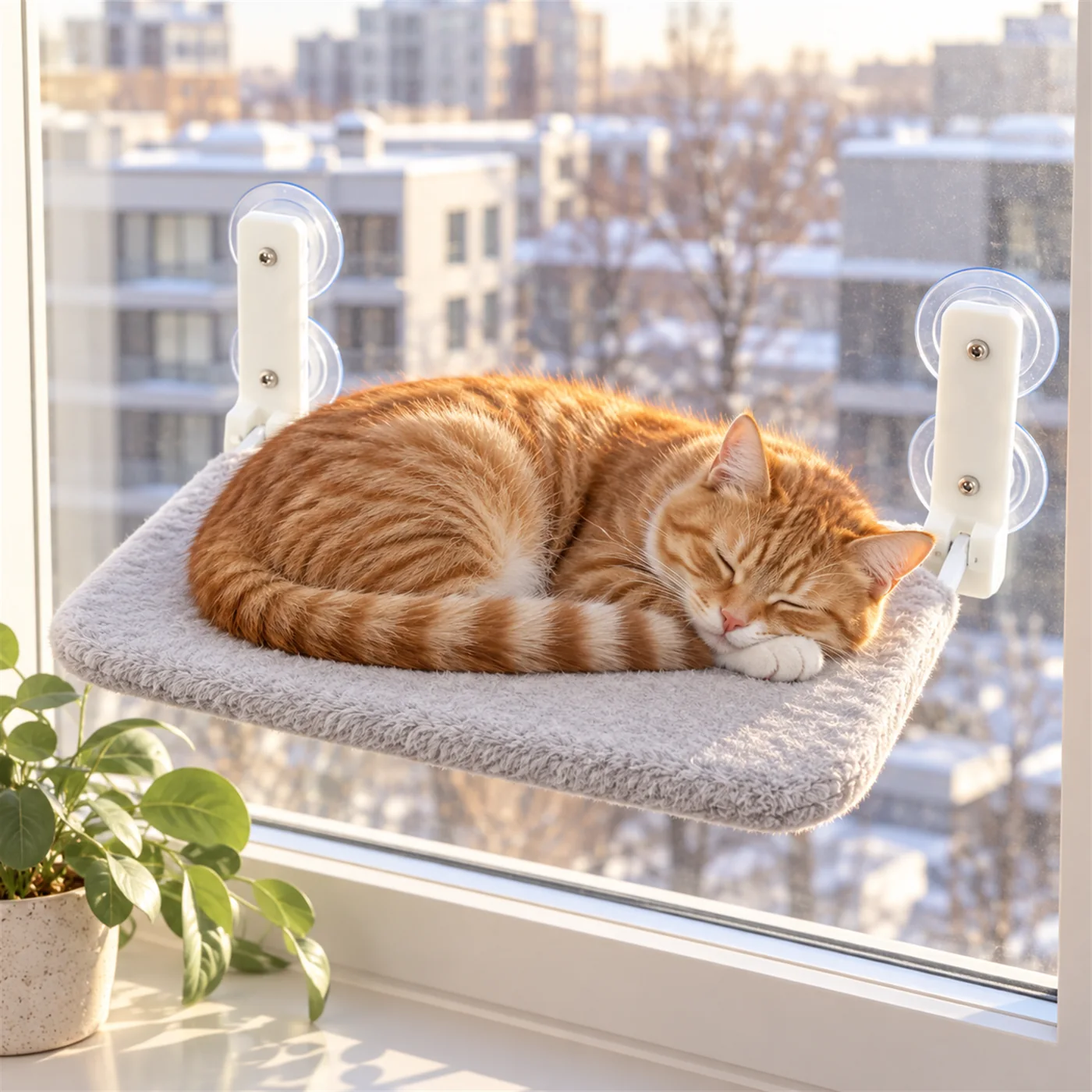
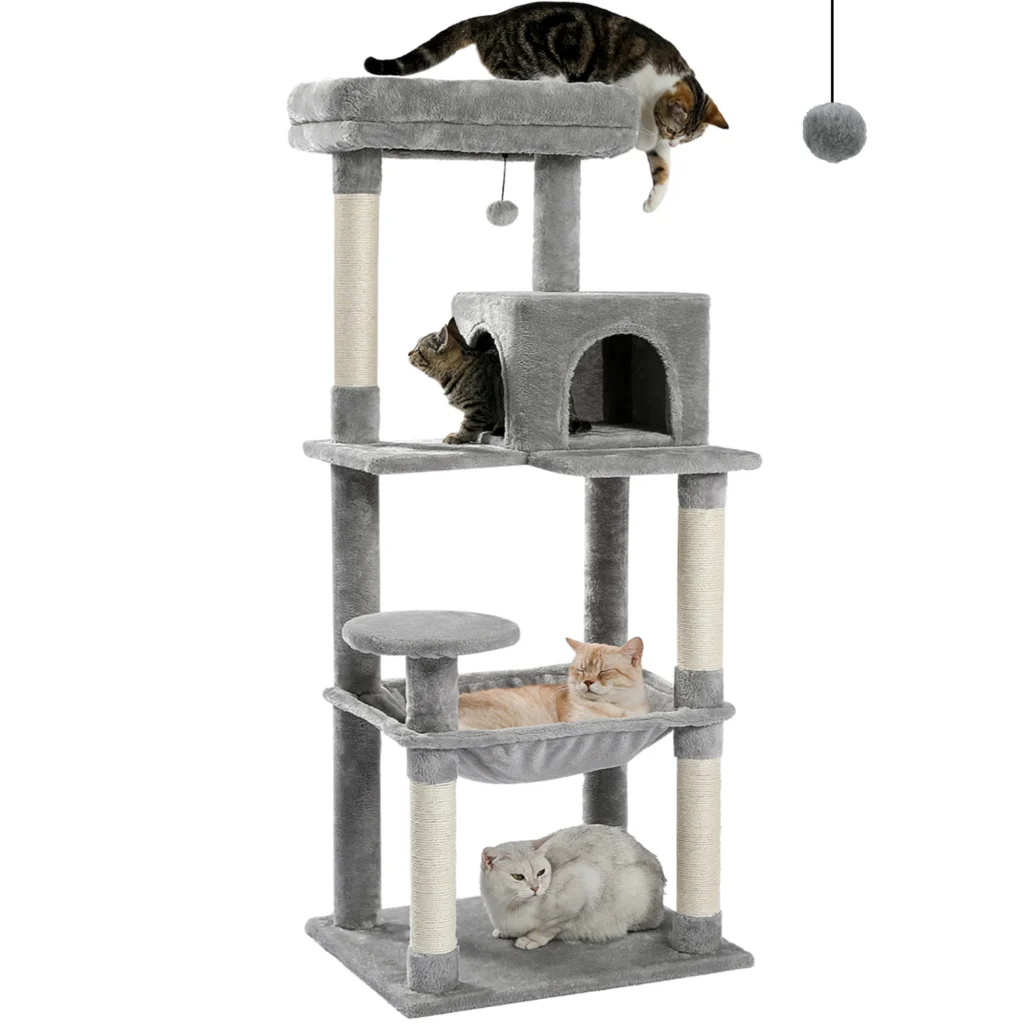
- Height. Cats feel safer and more confident up high. A cat tree, cat wall shelves or a cat window hammock adds territory without taking floor space. Our guide to the best cat trees for small apartments helps you choose.
- Daily play. Two short sessions a day burn energy and build your bond. Our guide on how to tire out a cat before bed has a simple routine.
- The right place to scratch. Put a scratcher next to the couch from day one; it’s much easier than breaking the habit later. See how to stop your cat scratching the couch.
A simple first-week plan
| When | What to do |
|---|---|
| Day 1 | Bring your cat home in the carrier, straight to the safe room. Show the litter box and water, then leave them in peace. |
| As soon as possible | Arrange the first vet visit after bringing your cat home. |
| While your cat is settling in | Visit often, sit quietly, offer treats and short play sessions. Check that your cat is eating, drinking and using the box. |
| When your cat is eating, drinking, using the litter box and exploring calmly | Open up the rest of the apartment one area at a time while you’re home. |
| Once your cat is settled | Establish a daily routine that includes play, grooming as tolerated and access to the scratcher by the sofa. |
The Cornell Feline Health Center warns that an adult cat can be seriously affected after as little as 24 hours without food; for a kitten younger than six weeks, 12 hours can be dangerous. Contact your veterinarian promptly, and call sooner if your cat is vomiting, lethargic, having trouble breathing, straining to urinate or seems otherwise unwell.
Frequently asked questions
What do I need before bringing a cat home?
A carrier, food and water bowls, cat food, a litter box with litter and a scoop, a scratching post or pad, a bed or hiding spot, a few toys, a brush, nail clippers and an ID tag or microchip. Cat-proof your apartment and book a vet visit before the first day.
How many litter boxes do I need in a small apartment?
The ASPCA and Cornell recommend one per cat plus one. For one cat, that’s two boxes if you have the space; at minimum, keep one large, uncovered box scooped every day.
Can a cat live happily in a small apartment?
Yes. What matters is not square footage but things to do: climbing spots, a window view, daily play and places to hide. Our guide to indoor cat enrichment in small apartments explains how.
When should I take my new cat to the vet?
As soon as possible after bringing your cat home, Cornell’s Feline Health Center advises, then at least once a year according to the ASPCA.
Which plants are dangerous for cats?
Lilies are the most dangerous: the FDA warns that all parts of true lilies and daylilies, even the pollen, can cause fatal kidney failure. Check any houseplant against the ASPCA’s toxic and non-toxic plant list before bringing it home.
Ready to set up? Shop everything for your new cat, or read more in The Indoor Cat Guide.